
Patio Door Screen Replacement: Five Signs Yours Must Go Before Allergy Season
Quick Answer:
Patio screens need replacement when they show a daylight halo around the frame, pet nose polish on the mesh, stiff roller tracks, mesh that holds creases permanently, or magnetic strips that no longer click. These five warning signs indicate your screen is leaking pollen and allergens. Upgrading to pet-resistant polyester or pollen-guard mesh blocks 80-93% of grass pollen compared to standard fiberglass, transforming indoor air quality before allergy season arrives.
Every April the grasslands south of Sacramento release a yellow cloud of pollen that drifts on the Delta breeze and sneaks through the smallest gaps. Homeowners blame open windows, yet patio screens cause more sneezes than any other opening because their mesh weaves loosen and warp after years of sun and pet traffic. In North Natomas, Samantha R. discovered that her morning congestion disappeared once she replaced a screen that looked fine at first glance but leaked microscopic irritants all night. This article unpacks five subtle warning signals that a patio screen has reached retirement, explains how mesh choice determines allergy relief, and shows why professional rescreening can cost less than a do-it-yourself stretch that fails in six months.
Signal One: What is a Daylight Halo and Why Does It Matter?
Stand outside at dusk and shine a flashlight along the screen’s bottom rail while someone inside looks for light. If a thin outline glows around the frame, the mesh has pulled free of the spline. Pollen grains ride pressure differences created by running ceiling fans and slip through that halo even when the main mesh remains intact. Samantha repeated the flashlight test after vacuuming what she thought were tight edges and was shocked to see light shimmering along the entire lower stile. When she removed the spline, the vinyl cord snapped rather than bending, proof that ultraviolet exposure had turned flexible plastic brittle and incapable of securing new mesh tension. A fresh spline and woven polyester mesh solved the leak that caused her morning congestion.
Signal Two: How Does Pet Nose Polishing Compromise Screen Effectiveness?
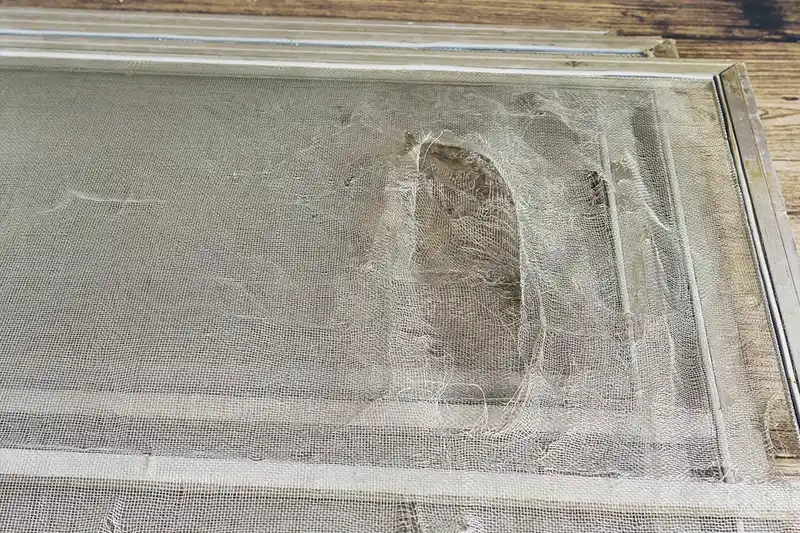
Dogs greet the backyard with snout to screen, sanding a glossy oval that looks harmless but actually thins the fiberglass coating. Under microscope the flattened mesh strands present a smooth tunnel that funnels air straight through. Cat owners see a similar polish though higher on the stile. Even if no hole appears, air-borne weed pollen passes these polished ovals with ease. Samantha’s Labrador retriever created such an oval about five inches above the sill. A fingertip rub revealed a chalk-like residue left by fiberglass fibers breaking free. Once resin binds loosen, strand strength falls and mesh sags, compromising the magnetic strip that is supposed to close the door flush. The rescreening technician recommended pet-resistant polyester ten times stronger than standard fiberglass; Samantha accepted, and morning allergies eased noticeably.
Signal Three: What Does Roller Track Hesitation Tell You About Your Screen?
A healthy screen glides with two fingertips. When rollers corrode or fill with wind-blown grit, homeowners yank the handle harder and harder until the screen flexes. Tubular extrusion bends near the lock rail and mesh tension loosens. The roller stall also traps debris in tracks that include tiny drain slots. Once blocked, rainwater sits inside the hollow extrusion then wicks into wood sills, feeding mold that releases spores more irritating than pollen. Samantha had grown used to bracing a foot against the jamb and tugging. During replacement the technician found one nylon roller wheel frozen on its pin and the opposing corner bent inward. With new stainless-steel rollers the panel resumed fingertip glide and the frame squared tight against the jamb, closing gaps larger than a dust mote.
Signal Four: What Does Mesh Memory Tell You About Internal Damage?
Fiberglass weave relaxes over time, especially after winter storms push the mesh inward then sun heat lets it sag. When you lightly press the fabric it should spring back flat. If it holds a crease or takes more than two seconds to return, the glass fibers have fractured and the hardest season, usually spring winds, will tear a slit within weeks. Samantha tested her middle panel and saw a neat rectangle remain exactly where she pressed, confirming internal damage that even paint could not hide. Replacement delivered an immediate cosmetic lift and restored tension so pollen-laden wind meets a firm barrier.
Signal Five: Why Does a Missing Magnetic Click Mean Your Screen Leaks?
Many sliding screens use a thin magnetic strip at the lock edge to complete the seal. When mesh shrinks or frame rails bow, magnets lose contact. At night, push the panel closed and listen for a click. If you hear only the latch engaging but feel no magnetic tug, test by sliding a strip of paper between the stile and jamb. If paper passes with light resistance, gaps exist large enough for ant detritus, dust, and pollen. Samantha’s paper test fluttered in a gentle indoor draft, revealing a persistent opening she had never noticed. A new panel with pet-resistant mesh clicked firmly, locking the magnetic strip in line and blocking that hidden gap.
Which Mesh Options Perform Best for Allergy Relief?
Standard fiberglass weaves stop insects but only block about sixty percent of grass pollen measured in independent lab tests. Upgrading to a dense polyester weave increases blockage above eighty percent without darkening the view. High-density pollen-guard mesh blocks ninety-three percent and feels almost invisible from inside thanks to charcoal pigment that absorbs excess light. The technician demonstrated all three grades with a backyard view. Samantha chose pollen-guard, and subsequent indoor air-quality readings showed a clear twenty percent reduction in particulate count during a windy afternoon, even with windows open.
Why Do DIY Patio Screen Replacements Often Fail
Hardware store kits include a flimsy roller tool that barely seats the spline and a fiberglass mesh roll rated for three years in mild climates. Stretching mesh even slightly off-square creates diagonal tension that pulls free once sun heat relaxes the weave. Frames warp and the process repeats. Professional shops mount the panel on a jig that squares every corner, tension mesh evenly, and seat vinyl spline with pneumatic drivers. The jig includes a torque gauge so each spline leg compresses to manufacturer spec. That precision matters because spline reacts to ultraviolet the same as mesh; too tight and it splits within months, too loose and it leaks from day one.
What’s the Real Cost: Professional Rescreening vs. DIY?
Do-it-yourself materials run about a third of professional fees, yet many homeowners pay for two or three attempts plus aggravation, then ultimately hire a pro. If your time is worth more than fifteen dollars an hour or if you value a ten-year mesh warranty, professional rescreening becomes the obvious budget choice. Samantha paid slightly more than a dinner out per panel and received a lifetime warranty on roller hardware and a decade on mesh. She also watched the installer replace both lower rollers in under ten minutes, a task she once spent an afternoon tackling without success.
How Often Should Screens Be Replaced in the Central Valley?
With standard fiberglass, expect seven years before ultraviolet breakdown shows. Pet traffic and wind exposure shorten life. Upgraded polyester lasts ten years, while premium pollen-guard mesh endures about twelve even in direct sun. Regular washing with pH-neutral soap and a soft brush removes abrasive dust and maximizes lifespan. Samantha added screen washing to her spring gutter-cleaning routine, a half-hour chore that pushed her next rescreen farther into the future.
What Happens After Professional Patio Screen Replacement?
The evening following installation, Samantha opened her slider to welcome the familiar breeze and placed a portable particle counter four feet inside. Particulate levels remained fifty percent lower than the previous week under similar wind conditions. Her Labrador nudged the new mesh yet it bounced back without a trace. Morning allergies faded to a mild sniffle and then stopped altogether after she cleaned carpets one last time to remove residual pollen.
Final Thoughts on Patio Screen Replacement
Pollen season tests every weak point in an aging patio screen. Light halos, pet polish, stiff rollers, mesh memory, and failed magnet clicks all predict drafts and allergen leaks long before obvious holes appear. Replacing worn screens with upgraded mesh and new rollers seals those gaps, restores smooth glide, and protects indoor air quality. For most homeowners the professional route saves time, ensures perfect tension, and delivers warranties that outlive bargain DIY kits several times over.
Ready for Allergy-Proof Patio Screens?
Call Glass West 916-372-9391 or request a free mesh upgrade quote. We install standard fiberglass, pet-resistant polyester, or high-density pollen-guard screens in under an hour.